Signs a Senior Dog Is Hurting During Walks
Medically reviewed by Justin Shmalberg, DVM, CVA, ACVN, ACVSMR — For general education — not a substitute for veterinary care.
Most owners catch the limp; almost nobody catches the three or four subtler tells that show up a season earlier.

On this page
Bodie was a fourteen-year-old beagle mix, forty-one pounds, who’d walked the same six-block loop every morning for a decade. His owner called me not because he’d started limping — he hadn’t — but because he’d started stopping at the same corner, a slight rise about halfway through the route, and standing there for ten or fifteen seconds before continuing. It had been happening for about three weeks. No yelp, no obvious lameness, just a pause on an incline he used to take without breaking stride. That pause was the whole story.
Owners are trained, understandably, to watch for limping. It’s visible, it’s dramatic, and it’s the sign every pet-owner blog leads with. But in my practice, limping is usually a late finding. By the time a dog is favoring a leg on a walk, the joint has typically been compensating for weeks or months. The signs that show up earlier are quieter, and they’re the ones worth learning to read.
The pause, not the limp
The single most useful early sign is hesitation at a specific point in a routine walk — a curb, a slope, a patch of gravel, a set of porch steps. A dog with normal joints treats terrain changes as noise. A dog with early joint pain starts doing quiet math: is this worth the discomfort? That hesitation often shows up before any change in gait, and it’s specific to certain surfaces or grades rather than the whole walk.
Watch for a shortened stride length rather than an outright limp. Dogs with hip or stifle discomfort often take smaller, quicker steps to reduce the time weight is loaded on a sore joint, which can look almost like a change in personality — “he seems more careful” — before it looks like a mobility problem. A bunny-hopping gait in the rear legs, where both back legs move together instead of alternating, is a more specific tell for hip or lower-back involvement and deserves a veterinary exam rather than a wait-and-see approach.

What changes after the walk, not during it
Some of the most reliable signals don’t show up on the walk itself — they show up in the twenty minutes after. A dog that used to flop straight into a nap now circles and readjusts several times before lying down. A dog that used to bound up from a rest now takes visibly longer to get moving again, sometimes stiff for the first ten or fifteen steps before loosening up. That post-exercise stiffness, sometimes called warm-up lameness, is a classic osteoarthritis pattern and one I ask owners about specifically because it’s easy to miss if you’re not looking for it.
I had a client with a nine-year-old Labrador, sixty-eight pounds, who insisted her dog was “totally fine on walks” — and he was, for the first ten minutes. What she hadn’t clocked was that he’d stopped jumping into the car afterward, waiting instead for the tailgate-to-ramp routine they’d abandoned two years earlier when he was younger and more limber. She’d chalked it up to him “getting lazy.” It wasn’t laziness. It was a joint deciding that a four-foot vertical jump wasn’t worth the trade after twenty minutes of exercise had already used up its tolerance for the day. Once we mapped out the timeline — when the ramp reappeared, when he started declining the couch at night, when the stride shortened on the return leg of the walk but not the outbound leg — the pattern was obvious in hindsight. It rarely is in real time.
Reluctance to jump onto furniture or into a car, slower descent on stairs than ascent, and a change in how a dog lies down — dropping heavily instead of lowering with control — round out the list of after-walk signs worth tracking over a week or two rather than a single outing.
Where nutrition fits into the picture, and where it doesn’t
Diet and supplementation are not a substitute for a veterinary orthopedic exam, and I’d push back hard on any framing that suggests otherwise. But once pain is confirmed or suspected, the ingredient literature on joint support is genuinely worth weighing, not dismissing. Glucosamine and chondroitin are among the most studied joint support ingredients for dogs, and the mechanistic case has some real backing: chondroitin has been shown to support healthy synovial fluid homeostasis, according to a Frontiers in Veterinary Science review, and glucosamine HCl has demonstrated the ability to prevent experimentally induced cartilage degradation in vitro, per the Journal of Veterinary Medical Science. Green-lipped mussel powder has a different but complementary evidence base — extracts alleviated paw swelling and reduced inflammatory markers including TNF-α and IL-17 in animal models, according to research published in Nutrients.
That’s a reasonable case for including a joint supplement as one piece of a mobility plan for a dog already showing the signs above — not a claim that any supplement reverses arthritis or eliminates the need for imaging and a real diagnosis. The honest counterargument, the one I take seriously, is that a lot of joint products are dosed too low to matter or built around ingredients with thin canine-specific data. That’s a fair critique of the category, and it’s why label reading and dose comparison matter more than brand reputation. Weighing what a supplement can realistically do for a dog’s mobility means being specific about the mechanism and the dose, not vague about “joint support” as a category.
A short scene that sums up the pattern
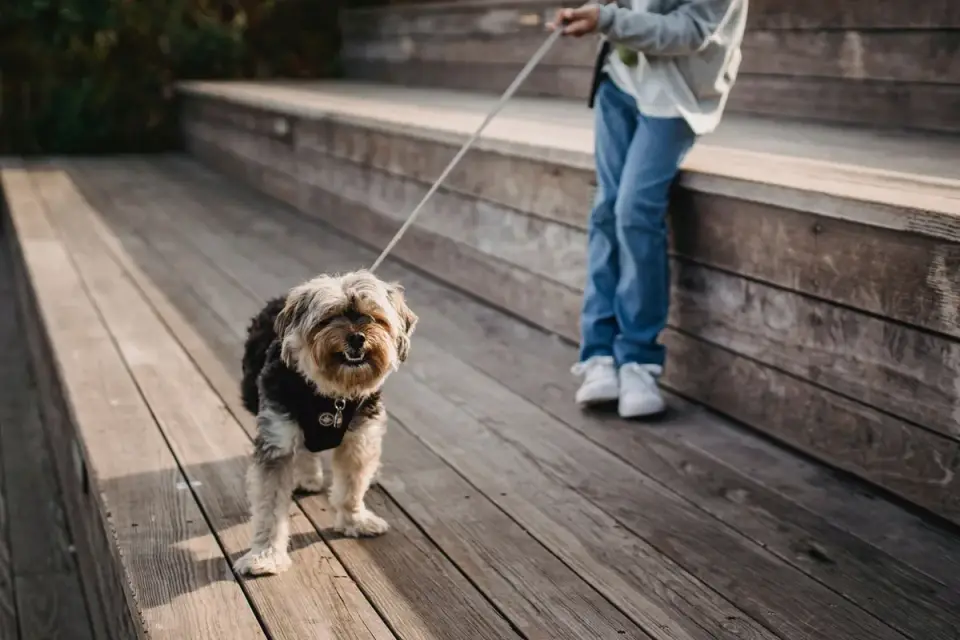
The dog I think about most on this topic was a twelve-year-old German Shepherd named Otto, eighty-two pounds, who came in because his owner thought he was “just slowing down with age.” Over about two months, Otto had gone from covering their usual thirty-minute route without stopping to needing two rest breaks, always at the same two spots — a slight downhill and a patch of uneven sidewalk near a construction site. He wasn’t limping. He was, according to his owner, “just being an old dog.” What he was actually doing was route-editing: taking the smoother side of the street, avoiding the downhill by crossing early, and resting exactly where the terrain got harder. Route-editing is one of the most consistent things I see in dogs with early hip or spinal discomfort, and it’s almost always dismissed as a personality quirk rather than read as a symptom, because the dog is still willing, still finishing the walk, still wagging at the end. Willingness to finish a walk and comfort during it are not the same thing, and that gap is where a lot of joint disease hides in plain sight for months before anyone names it.
Structure and pacing matter as much as ingredients here. If you’re unsure whether your dog’s current routine is appropriate for their age and joint status, our guide on how many walks a day a dog needs and our age-by-age breakdown of walk length are both useful starting points before you change anything. For dogs already showing hesitation or stiffness, balance and proprioception work and, for more involved cases, at-home physical therapy under a rehab vet’s guidance tend to do more than any single supplement in isolation.
If you notice hesitation at a specific spot on a familiar route, a shortened stride, warm-up stiffness after rest, or a dog that’s started avoiding jumps it used to take without thinking, that’s enough reason for an exam — not a wait-and-see. The walk itself is usually the most sensitive diagnostic tool you already own; you just have to watch the whole thing, not just the parts that look dramatic.
Frequently asked questions
Can a senior dog be in pain on walks without limping?
Yes. Early joint pain more often shows up as hesitation at specific terrain, a shortened stride, or stiffness after resting than as an obvious limp, which tends to appear later once a dog has been compensating for a while.
Should I stop walking my dog if I see these signs?
Not automatically. Shortening the walk, avoiding the terrain that triggers hesitation, and scheduling an orthopedic exam are usually more useful first steps than stopping exercise altogether, since inactivity can worsen joint stiffness on its own.
Sources
- Chondroitin sulfate and synovial fluid homeostasis in canine joint support — Frontiers in Veterinary Science
- Glucosamine HCl and cartilage degradation, an in vitro review — Journal of Veterinary Medical Science
- Green-lipped mussel powder and inflammatory markers — Nutrients