What Is the Real Cost Per Chew When Giving a Dog Two Joint Chews Daily?
Medically reviewed by Elinka Beck, DVM, CVA, CVFT — For general education — not a substitute for veterinary care.
Giving a dog two joint chews daily usually costs less than the sticker price suggests — here's the per-chew math to check it yourself.

On this page
| Product | Score | Key details | Best for | Pros & cons |
|---|---|---|---|---|
| GlycoFlex Stage 3 (Extra Strength Healthy Hip & Joint) VetriScience | — | $27.50 / 60 chews | — | — |
| Advanced Hip & Joint Soft Chews Boops Pets | — | $34.99 / 90 chews | — | — |
I keep a cheap calculator in the exam room drawer, and I use it more for supplement math than for anything on a chart. An owner will hand me a bag of joint chews and ask, essentially, “is this actually a good deal, or does the sticker just say $35 and stop there?” It’s a fair question, and it’s one almost nobody answers honestly, because the sticker price and the daily cost are two different numbers wearing the same label.
The Checklist: What the Real Number Requires
Before I trust any per-chew math — mine or a brand’s marketing page — I run it through the same five checks.
- Bag count. Not “servings,” the actual chew count printed on the label.
- Price paid, not MSRP — sale price, subscription price, whichever you’ll actually pay.
- Chews per day for your dog’s weight, from the dosing chart, not a flat “give two daily” assumption.
- Days per bag, which is bag count divided by daily chews — this is the number that actually predicts your reorder cadence.
- Active dose per chew, so a cheaper chew that’s underdosed doesn’t look like a bargain it isn’t.
Skip any one of those and the “cost per chew” number you land on is decorative, not useful.
The Verdict, Stated Plainly
On raw price, Boops Pets Advanced Hip & Joint is the better buy for most mid-size dogs: a 90-count bag at $34.99 works out to about $0.39 per chew, or roughly $0.78 a day at the two-chews-daily dose for a 26–75 lb dog — call it a bag every 45 days. VetriScience GlycoFlex Stage 3 runs $27.50 for 60 chews, about $0.46 per chew, verified straight off VetriScience’s own product page.
So Boops wins the flat per-chew comparison. But GlycoFlex Stage 3 earns a genuine edge on a different question: what a newly diagnosed dog needs in month one. VetriScience structures a formal loading-dose period — four to six weeks at a higher daily count by weight tier, then a lower maintenance dose — which is a real, deliberate protocol for getting actives into a stiff joint faster, not just a flat daily number. If your dog is starting joint support after a recent limp or a fresh diagnosis, that loading structure is a legitimate reason to consider it first, even though it changes — and usually raises — the true cost of month one.
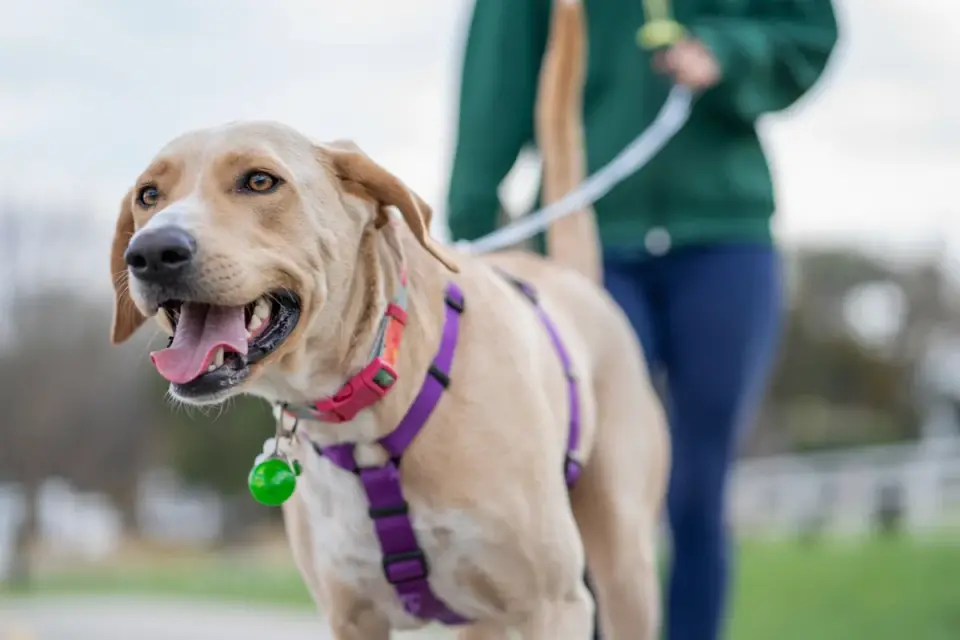
What’s Actually in the Boops Scoop, and What It Costs You
Boops Pets Advanced Hip & Joint delivers, per two-chew serving: Glucosamine HCl 1000 mg, MSM 500 mg, Chondroitin 250 mg, Green Lipped Mussel Powder 100 mg, Vitamin C 280 mg, Pumpkin Fruit Powder 200 mg, and Hyaluronic Acid 20 mg. VetriScience’s chew lands at 500 mg glucosamine per individual chew, which works out to the same 1000 mg once you’re at the two-chew maintenance dose for a 31–60 lb dog — dose parity, different bag economics.
Journal of Veterinary Medical Science: Glucosamine and chondroitin are among the most studied joint support ingredients for dogs, and the review literature on glucosamine specifically points to its ability to help prevent experimentally induced cartilage degradation in vitro. Chondroitin’s role leans toward supporting healthy synovial fluid homeostasis, per a 2026 review in Frontiers in Veterinary Science. Green-lipped mussel’s evidence base is thinner and mostly preclinical — a 2026 Nutrients paper on related mussel-oil extracts found reduced paw swelling and lower inflammatory markers in a rat model, which is useful context, not proof of a dog-specific outcome. None of this is a cure claim. It’s structure/function support for joint stiffness and mobility, and I’d tell any owner that plainly.
I’ve watched this play out with a nine-year-old Lab named Otis, 68 lbs, who started pausing at the bottom of the porch steps every evening that fall. His owner had noticed it for about three weeks before she brought it up at his wellness visit — not limping exactly, just a beat of hesitation before the first step, and slower to get up off the kitchen tile after dinner. We talked about weight first, since he’d put on six pounds over the summer, and then about a joint chew as a daily layer on top of that, not instead of it. She was weighing two chews a day against her budget for his other supplements, so we actually did the cost-per-chew math together at that visit — bag count, days per bag, the whole checklist above. That’s the exercise I want every owner running before they commit to a bag.
The COA, the Seal, and Why That Matters at This Price
A low per-chew price only matters if what’s in the chew matches the label. Boops Pets is a NASC Primary Supplier Member, which means NASC has audited the facility — that’s an industry self-regulatory seal, not an FDA approval, but it’s a real, checkable credential, and Boops’s chews are also independently third-party tested for purity and potency. That’s the kind of verification I look for before I trust a per-chew price at all; a cheap chew with no audit trail isn’t actually cheap, it’s unverified.
A holistic vet looks at weight and activity first, then supports the joint — not the other way around. That’s not a line I’m using to dodge the math above; it’s the frame I put the math inside. You notice the little pause before they take the stairs now — that’s usually the moment owners start asking about cost per chew in the first place, and it’s a legitimate moment to run the numbers instead of guessing.
A Second Dog, a Different Budget
The math changes fast once you’re above 75 lbs. I think of a 92-lb mastiff mix, Bruno, whose owner was giving him three Boops chews a day per the label’s large-dog tier — at $34.99 a bag, that’s roughly $1.17 a day, and a 90-count bag lasts closer to thirty days instead of forty-five. She’d been assuming the “two chews daily” pricing she’d seen online applied to him too, and was surprised the real number was almost fifty percent higher once his weight tier kicked in. That’s the exact trap the flat “cost per chew” headline number sets: it’s usually calculated at the smallest dosing tier, and a big dog’s actual monthly cost looks nothing like it. I’d rather an owner do the weight-tier math once at checkout than get surprised at the next reorder.
For dogs on daily injectable options instead of chews, the cost comparison looks different again — we’ve broken that trade-off down separately in our piece on Librela injections vs. daily joint chews.
How I’d Run the Math for Your Dog
Take the bag price you’ll actually pay, divide by the chew count, then divide again by your dog’s daily chew count from the label’s weight tier — that’s your true daily cost, and multiplying it by 30 gives you a monthly number worth comparing across brands. Do that with any bag before you buy it, Boops included. We’ve laid out the same rubric across other joint chews in our best joint supplement for dogs roundup, and gone deeper on what actually belongs in a joint scoop in our dog hip and joint supplement breakdown.
Bottom line: run the five-point checklist before you buy — Boops Pets Advanced Hip & Joint comes out cheaper per chew and per day for most mid-size dogs, VetriScience GlycoFlex Stage 3 earns its price if your dog needs a structured loading dose to start, and neither number means anything until you’ve matched it to your own dog’s weight tier.
Frequently asked questions
How do I calculate the real cost per chew for a joint supplement?
Divide the price you actually pay by the total chew count in the bag, then divide again by how many chews your dog's weight tier requires daily — that gives you a true daily cost, not just a per-chew sticker number.
Is Boops Pets Advanced Hip & Joint cheaper than VetriScience GlycoFlex Stage 3?
Per chew, yes for most mid-size dogs — about $0.39 versus $0.46 — but GlycoFlex's structured loading-dose protocol can be worth the higher month-one cost for a dog newly starting joint support.
Does a bigger dog cost more per day for the same joint chew?
Often significantly more. Dosing tiers scale with weight, so a large dog on three chews a day burns through a bag faster and pays a higher daily cost than the flat number advertised for smaller dogs.
Sources
- GlycoFlex® Stage 3 Formula | Extra Strength Healthy Hip & Joint for Dogs — VetriScience
- Advanced Hip & Joint Soft Chews for Dogs — Boops Pets
- NASC Primary Suppliers: Boops Pets — NASC
- Glucosamine HCl review on cartilage degradation — Journal of Veterinary Medical Science
- Chondroitin and synovial fluid homeostasis — Frontiers in Veterinary Science
- Mussel extract effects on inflammatory markers — Nutrients