Does Boswellia Reduce Inflammation in Arthritic Dogs?
Medically reviewed by Donna Hein, DVM, CVA, FAAVA, CVCH, CVTP, CVFT, CVMMP, MSTCVM, MSIVM — For general education — not a substitute for veterinary care.
Boswellia may help support a calmer inflammatory response in arthritic dogs, but the strongest canine evidence still sits with other joint actives.

On this page
A twelve-year-old Lab mix named Sadie came in with her owner on a Tuesday, the kind of gray afternoon that seems to make every stiff-hipped dog in the waiting room a little slower off the exam table. Sadie’s owner had already read about Boswellia serrata on a forum the night before — she wanted to know if it would “calm down” the swelling she thought she was seeing in Sadie’s front knees before her next flare. I watched Sadie cross the floor: short strides, a slight hitch loading the left front leg, no visible heat or effusion on palpation. That gap — what an owner sees as inflammation versus what I can actually measure on exam — is where most Boswellia questions start in my practice, and it’s worth sitting with before reaching for any bottle.
The verdict, stated plainly: Boswellia serrata’s resin extract has a real pharmacological reputation for calming inflammatory pathways, and in my clinical experience it can be one useful piece of a joint-support pattern for an arthritic dog — but I don’t reach for it as a stand-alone answer, and I don’t have canine-specific trial data in front of me strong enough to put a number on how much inflammation it reduces in a dog’s joint. The ingredients with the firmer evidence base for dogs, at least among what I’ve reviewed closely, are glucosamine, chondroitin, and green-lipped mussel.
Why I organize the whole toolkit around one pattern, not one herb
In TCVM terms, I don’t treat a stiff, arthritic dog as a single lesion to plug with a single compound. I look at the whole pattern — diet, movement, weight, cold sensitivity, the specific joints involved — and I build the supplement stack around that pattern rather than chasing whichever ingredient is trending. Boswellia fits into that pattern as an anti-inflammatory herb with a long history in both Ayurvedic and Western herbal use, prized for its boswellic acid content. It’s reasonable to include it as one tool among several. It is not, on its own, the pattern.
That’s an important distinction for owners doing their own label research: a supplement that “may help support” a healthy inflammatory response is not the same as one with peer-reviewed canine dosing data behind it. I keep those two categories separate on purpose.
What the joint-ingredient evidence actually says
Here’s where I lean on ingredients I can back with citations rather than anecdote. Chondroitin has research support for its role in Frontiers in Veterinary Science research showing it “supports healthy synovial fluid homeostasis” — a structure/function finding, not a cure claim, but a meaningful one for a dog with wear-and-tear joint changes. Glucosamine HCl has been studied in ways that, per a review published via the Journal of Veterinary Medical Science, show it can “prevent experimentally induced cartilage degradation in vitro.” And green-lipped mussel powder has data from a Nutrients study noting extracts “alleviated paw swelling in rats and reduced serum levels of rheumatoid factor (RF), anti-cyclic citrullinated peptide (anti-CCP) antibody, and pro-inflammatory cytokines such as TNF-α and IL-17” — again, an animal-model finding, not a canine clinical trial, but a useful signal on the inflammatory pathway green-lipped mussel is thought to touch.
I don’t have an equivalent line of canine or even in-vitro cartilage data for Boswellia to cite here. That gap doesn’t mean Boswellia does nothing — it means I hold the claim to a lower confidence tier than I hold glucosamine or chondroitin, and I say so to owners directly rather than letting a trending ingredient outrun its evidence.
A second dog, a different tradeoff
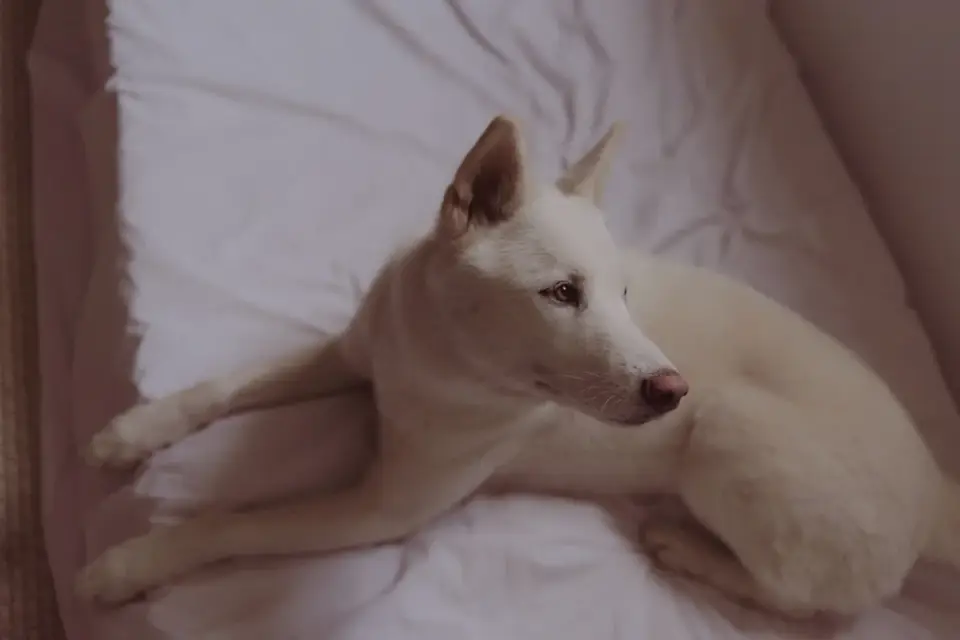
I think about a ten-year-old dachshund named Biscuit almost as often as I think about Sadie. Biscuit’s owner had already tried a glucosamine-chondroitin chew for four months with no visible change in how he handled the stairs to their apartment, and she was frustrated enough to want to switch to a Boswellia-only product she’d seen marketed for “joint inflammation.” I walked her through the same pattern-based thinking: Biscuit’s stiffness was worse in the morning and eased by midday, a rhythm that in my experience often tracks with a cold-sensitive presentation rather than a pure structural one. Rather than swap one single ingredient for another, we adjusted his environment — a ramp instead of stairs, a heated bed — and kept the glucosamine and chondroitin base while she asked me about layering in a Boswellia product for its anti-inflammatory angle. That’s the kind of tradeoff conversation Boswellia usually enters into: an addition to a pattern, not a replacement for one.
If you’re weighing dose and label questions on the glucosamine/chondroitin side of that pattern, our Boswellia Dosage for Dogs guide walks through what to check on a Boswellia label specifically, and Avocado Soy Unsaponifiables vs Glucosamine for Dog Cartilage covers how another cartilage-support ingredient stacks up against glucosamine on the data.
What I tell owners before they buy anything
A short answer, since I know it’s the one most owners actually want: Boswellia may help support a dog’s inflammatory response, and it has a long history of use for that purpose, but I don’t treat it as a substitute for the better-documented joint actives. If a dog’s arthritis is cold-sensitive, our Does Cold Weather Make a Dog’s Arthritis Worse? piece is worth reading alongside any supplement decision, since environment often does more heavy lifting than people expect. And if you’re comparing a joint chew’s full label rather than a single ingredient, Best Joint Supplement for Dogs shows how we score a full stack rather than one active in isolation.
Sadie’s owner left with a plan that kept glucosamine and chondroitin as the base, added a short trial of a Boswellia-containing product, and a recheck scheduled in six weeks to see whether her stride actually changed — not whether the swelling she’d read about online matched what we could measure. That’s the practical next step I’d suggest for most owners in her position: pick a base with real evidence, layer Boswellia in as a supporting tool if you want it, and give it a defined trial period with a way to measure whether it’s actually working for your dog.
Frequently asked questions
Is Boswellia safe to give alongside glucosamine and chondroitin?
In my experience these are commonly combined, but any new addition should be introduced one at a time so you can tell what's actually changing your dog's comfort or stool.
How long before Boswellia might show a visible effect?
I generally suggest a defined trial of several weeks with a specific, observable marker — like stairs or rising after rest — rather than an open-ended trial with no way to measure change.
Sources
- Chondroitin supports synovial fluid homeostasis — Frontiers in Veterinary Science
- Glucosamine HCl and cartilage degradation — Journal of Veterinary Medical Science
- Green-lipped mussel and inflammatory markers — Nutrients