Why a Dog Suddenly Refuses to Jump Into the Car
Medically reviewed by Karen Turner-Knarr, DVM, CVA, CVFT, CVCH — For general education — not a substitute for veterinary care.
A dog who stops jumping into the car isn't being stubborn — nine times out of ten, something hurts, and the pattern of when tells you where.
On this page
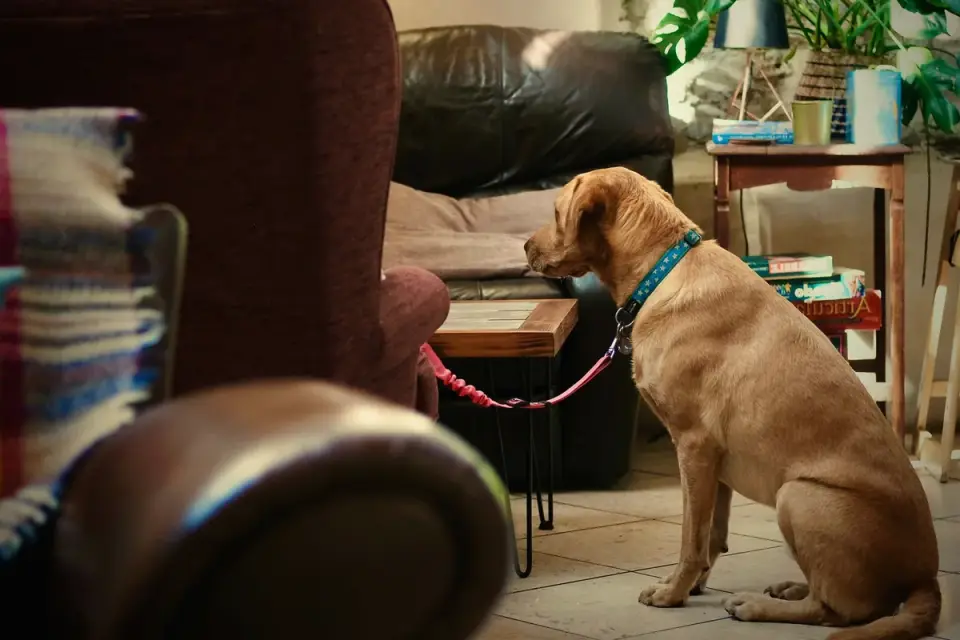
I still remember the Lab mix, Biscuit, nine years old, sixty-eight pounds, who planted all four feet at the open hatchback of a Subaru on a cold October morning and would not move. His owner told me he’d done it three days running — fine walking up to the car, then a hard stop, ears back, weight shifted onto his front end. That’s the scene I want you picturing, because the pattern in that scene is the diagnostic tool. Biscuit wasn’t refusing out of orneriness. When I ran my hands down his lumbar spine and hips, he flinched at the left hip and stood with his hind feet camped slightly forward, taking weight off that side. Cold mornings made it worse. That’s a joint pattern, and once you know to look for it, you’ll see it in half the dogs that “suddenly” stop jumping.
What actually changed, step by step
Start by ruling things out in order, not all at once.
- Check the surface and the jump height first. A new car, a taller SUV, a slicker hatchback liner — sometimes the dog is reading a genuinely harder jump correctly, not a painful one.
- Watch the whole body, not just the balk. Does the dog hesitate at the couch, the stairs, or the bed too? A refusal isolated to the car alone is less likely to be pain and more likely to be a bad experience (a slammed door, a car-sick episode, a scary vet ride) than a dog who’s also slowing down on stairs.
- Note the time of day and temperature. Stiffness that’s worse first thing in the morning or after a nap, and better once the dog has moved around for ten minutes, points toward joint or muscle involvement rather than fear.
- Look at the stance. A dog shifting weight forward off the hind end, standing with a slightly hunched back, or “sitting” crooked with one hip rotated out, is telling you something specific about where it hurts.
- Book the exam before you guess. Hip dysplasia, elbow dysplasia, early osteoarthritis, a soft-tissue strain, disc disease, and simple fear can all produce the same refusal at the tailgate. Only hands-on palpation, gait assessment, and sometimes imaging sort those apart.
Where I land, and the counterargument I take seriously
My working diagnosis, most of the time, is early joint pain — usually hip or stifle — layered on top of a learned avoidance the dog picks up fast once jumping has hurt even once. I treat those as two separate problems that need two separate plans: manage the discomfort, and separately retrain the behavior with a ramp or a lift assist so the dog isn’t rehearsing the fear. The counterargument I take seriously is that a lot of sudden refusals really are purely behavioral — one bad slam of the hatch, one carsick ride, and a smart dog generalizes fast with zero orthopedic component at all. That’s real, and I’ve seen it. But I still lead with a pain workup first, because treating a painful dog as merely “spooked” and pushing them to keep jumping is how early arthritis gets worse. If the exam is clean, I’m glad to be wrong and move straight to behavior work.
What the evidence actually supports for joint-related discomfort
In my own practice I blend a TCVM pattern read — is this dog showing a Kidney or Liver Qi deficiency pattern, cold-aggravated Bi syndrome, that sort of thing — with a standard Western orthopedic exam, because the two lenses catch different things. A dog with classic cold-worse, warmth-better stiffness reads to me as a Bi (painful obstruction) pattern, and it usually lines up with radiographic osteoarthritis on the Western side too. Neither lens alone tells the whole story.
On the supplement side, the ingredient classes with the most research behind them are glucosamine and chondroitin. A recent review found that glucosamine HCl may help prevent Journal of Veterinary Medical Science: experimentally induced cartilage degradation in vitro, and separate research on chondroitin in joint and mobility contexts found it may help support healthy synovial fluid homeostasis, per a 2026 Frontiers in Veterinary Science study. Green-lipped mussel powder has its own evidence base: in a 2026 Nutrients study, mussel-derived compounds alleviated paw swelling in rats and reduced serum markers of inflammation, including TNF-α and IL-17. None of that is a cure claim — it’s structure/function evidence that these ingredients may help support a dog’s joint comfort as part of a broader plan that starts with a real exam, not a substitute for one.
If your dog is refusing to jump and a vet has confirmed joint involvement, our guide to avocado soy unsaponifiables vs. glucosamine for cartilage walks through how those two ingredient classes actually compare on the label and in the data, and our broader best joint supplement for dogs piece scores several products against the same rubric so you’re not guessing at doses.
A second dog, a different tradeoff
The second case that stuck with me was Nell, a fourteen-year-old terrier mix, twenty-two pounds, whose owner swore the refusal came out of nowhere on a Tuesday. It hadn’t. Nell had been slower on her evening walks for about six weeks, sleeping later, and turning down stairs she used to take two at a time — her owner just hadn’t connected the dots until the car became impossible to ignore. That gap between the first quiet change and the moment it becomes undeniable is almost always weeks, not days, and it’s worth asking owners directly: has anything else been a little different lately? Nell’s owner was also weighing whether a daily chew was worth the pill burden for a dog who already took a thyroid medication twice a day — a real, practical tradeoff, not a small one for a fourteen-year-old dog and a tired owner.
What to do in the meantime
While you’re waiting on the exam, don’t force the jump. A ramp or a set of portable stairs removes the immediate strain and stops the dog from rehearsing either the pain or the fear response, and it costs less than a single specialist visit. Keep a simple log — the surface, the time of day, and whether the dog hesitated, balked, or refused outright — because that log is often more useful to your vet than a description from memory. If you’re weighing a joint supplement as part of the longer-term plan, our comparisons of Boops Pets vs. Jope and Boops Pets vs. Natural Dog Company read the labels and doses side by side so you can see what’s actually in the bag before you buy it.
So where does that leave you — the owner standing at the open hatch with a dog who won’t budge? Not with a verdict about stubbornness. With a question worth taking to your vet: is this pain, is this fear, or is this both, and which one do we treat first?
Sources
- Glucosamine and chondroitin sulfate prevent cartilage degradation — Journal of Veterinary Medical Science
- Chondroitin and synovial fluid homeostasis — Frontiers in Veterinary Science
- Green-lipped mussel compounds and inflammatory markers — Nutrients