On this page
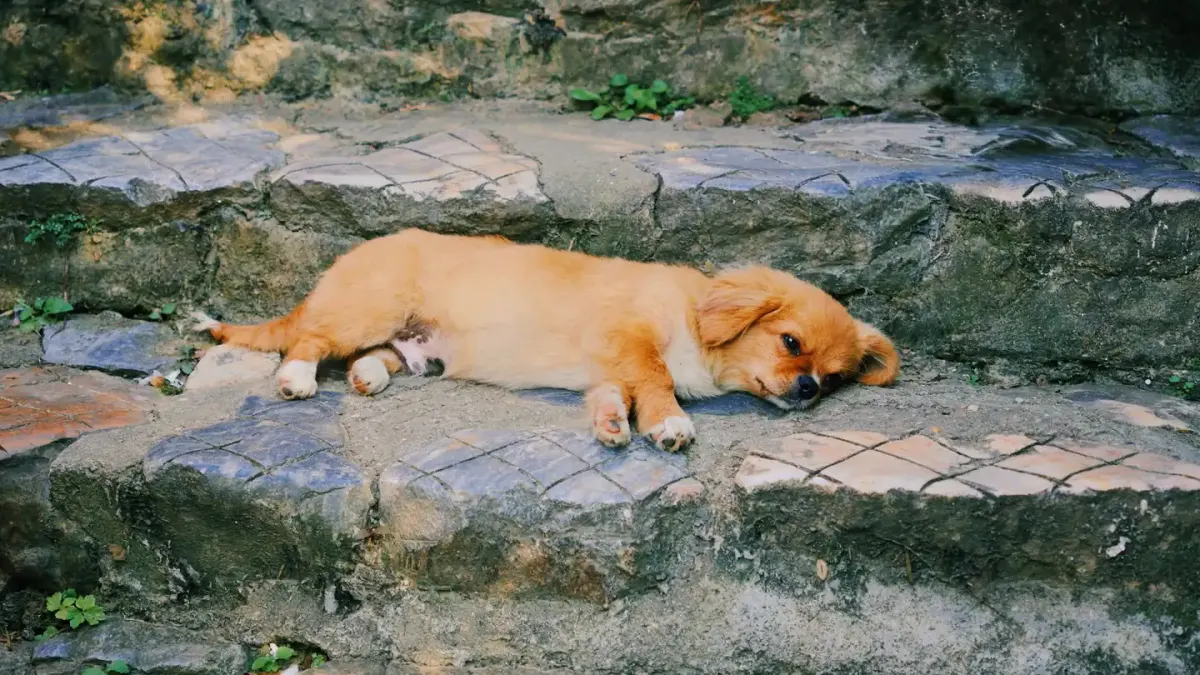
Morning was perfect. Evening is a hard no. I saw this last spring with a composite case I use for teaching: a 7-year-old, 68-pound Labrador mix who trotted a lakeside loop at 8 a.m., napped hard, then planted his chest on the driveway at 5 p.m. when the leash came out again. No limp on the first walk, no heat, just a flat refusal, a hard stare, and a slow shuffle back to the porch after ten steps. The owner worried about stubbornness, but the pattern — good first effort, failed second effort — pointed to load exceeding recovery, not attitude, and that changed what we measured next.
Do this first. Stop pulling. Let the dog choose to sit or lie down, check paws, nails, and pads for burrs or abrasions, offer water, and head home by the shortest shade route. Do not coax with jerks or chase games.
Then run the same 90-second check I use on the bench: nose-to-tail breathing rate, gum color and refill, any limb the dog unloads when standing, stiffness turning both directions, and soreness over toes, carpus, elbow, and hips. Note what is different from morning.
Read the refusal before you fix the walk
A second-walk refusal is usually fatigue, musculoskeletal soreness, heat carryover, under-fueling, or pain — rarely disobedience. Overdone morning mileage, new hills or sand, warm pavement, a heavy growth-spurt day for adolescents, or a deconditioned adult after a weekend hike will all show up as an evening shutdown.
My position is direct: adjust diet, load, and recovery before you reach for a joint bottle, because what a supplement can realistically do for diet, mobility, and recovery is support tissue nutrition over weeks, not rescue an overfaced afternoon. That framing grounds an integrative claim in the nutritional evidence — food, conditioning, and rest may help support whole-patient health, while glucosamine and chondroitin are among the most studied joint support ingredients for dogs for longer-term structure/function support.
The strongest counterargument is that a palatable chew calms owners faster than a training log. True, but it misreads the timeline. If the second walk fails by day 10 of a new program, the dose is not the problem; the progression is.
Cut the load in half, then rebuild by feel
Shorten the morning walk by 30–50% for three days and drop the evening walk to a sniff-and-pee loop. Keep surfaces forgiving — grass or dirt over concrete — and separate hard efforts by at least six hours.
Learn how long a dog walk should be by age before you add mileage, because puppies, seniors, and brachycephalic breeds bank fatigue differently. For young dogs still growing, pair that with how much exercise a puppy needs by age rather than matching an adult housemate stride for stride.
I learned the tradeoff the hard way on another composite case: a 3-year-old, 42-pound border collie mix who sailed through morning agility drills, then balked at the evening neighborhood loop three weeks in to a new routine. The owner had added fetch after the morning walk to “tire her out,” and by day 12 the dog started cutting corners wide and lying down at curbs. We cut fetch entirely, kept two 15-minute leash walks, added five minutes of nose work instead, and the evening refusal disappeared within four days. The failed approach was adding intensity to fix restlessness; the fix was subtracting impact and adding mental work while tendons and conditioning caught up.
Check fuel and fluids like a nutritionist. A complete and balanced diet fed to lean body condition matters more than any topper, and dogs doing two-a-days need water before, during, and after, plus a small post-exercise meal window if your veterinarian approves the schedule. Weigh monthly.
Soreness the next morning is your signal.
Where joint nutrition fits — and where it does not
Supplements do not make a tired dog walk twice. They may help support joint structures that take repetitive load, which is why I weigh the dose against the research before I score any label.
Chondroitin research described in Frontiers in Veterinary Science as work that “supports healthy synovial fluid homeostasis” is relevant here because synovial fluid bathes cartilage during those repeated steps. Glucosamine work summarized in the Journal of Veterinary Medical Science to “prevent experimentally induced cartilage degradation in vitro” is strictly bench data, not proof of a pain-free evening walk. Green-lipped mussel data in Nutrients noting that “BMO, GMO, and KO all alleviated paw swelling in rats and reduced serum levels of rheumatoid factor (RF), anti-cyclic citrullinated peptide (anti-CCP) antibody, and pro-inflammatory cytokines such as TNF-α and IL-17” is rodent and mechanistic, useful for ingredient literacy but not a reason to push through a refusal.
Read labels for form, milligrams per chew, feeding rate by weight, and third-party verification. If you run multiple dogs with mismatched stamina, borrow the split-work logic from how to exercise multiple dogs at once and anchor total work to the slower recoverer.
The edge case that changes the plan
Not every refusal is conditioning. I keep a composite senior case in mind: a 11-year-old, 54-pound husky mix, steady on morning strolls for years, who over two weeks began refusing the second walk and hesitating on three home stairs she had always climbed. No yelp, no swelling, just slower rises and a new wide turn at the curb. That timeline — gradual, symmetrical slowing rather than one hard day — prompted a veterinary exam for osteoarthritis, neurologic disease, cardiac fatigue, and weight gain rather than another supplement tweak, plus a rehab referral for low-impact strengthening.
Call your veterinarian promptly for limping longer than 24 hours, vocalizing, swelling, heat, dragging toes, heavy panting at rest, pale gums, collapse, or any refusal paired with appetite loss, vomiting, or fever. For weight-related fatigue, use gradual exercise for weight loss under veterinary supervision instead of doubling walks.
Brief recap: halve the load, audit surface, heat, fuel, and sleep, support joints with diet-first thinking, and let a persistent pattern trigger an exam.
For related context, read Exercise and Rehab Basics After IVDD or a Back Injury.
For related context, read When Can a Dog Run Again After Being Spayed or Neutered?.
Frequently asked questions
Should I force a dog to finish the second walk?
No. End the attempt calmly, check paws and gait, offer water, and take the shortest route home. Track whether the refusal repeats for 2–3 days.
How long should I rest a dog that refuses the evening walk?
Reduce total walking volume by 30–50% for three days and keep the second outing to a short comfort break. If morning stiffness or limping persists beyond 24 hours, call your veterinarian.
Can a joint supplement fix second-walk refusals?
Not acutely. Joint ingredients are long-term nutritional support, not same-day energy or pain relief. Fix load progression, surface, heat, body condition, and sleep first.
Sources
- Synovial fluid homeostasis study — Frontiers in Veterinary Science
- Cartilage degradation in vitro study — Journal of Veterinary Medical Science
- Marine oil paw swelling study — Nutrients